Workbook 3
Ideas in action about investigating conversations
Four missing conversations that enable Garce and Tom to have a different Friday night shift are imagined. Conversations that reflect a senior leadership who decided to shift their critical gaze from those assumed to be failing to communicate, onto their own acts and omissions which have helped set the scene for Grace and Tom.
Discovering the missing conversations
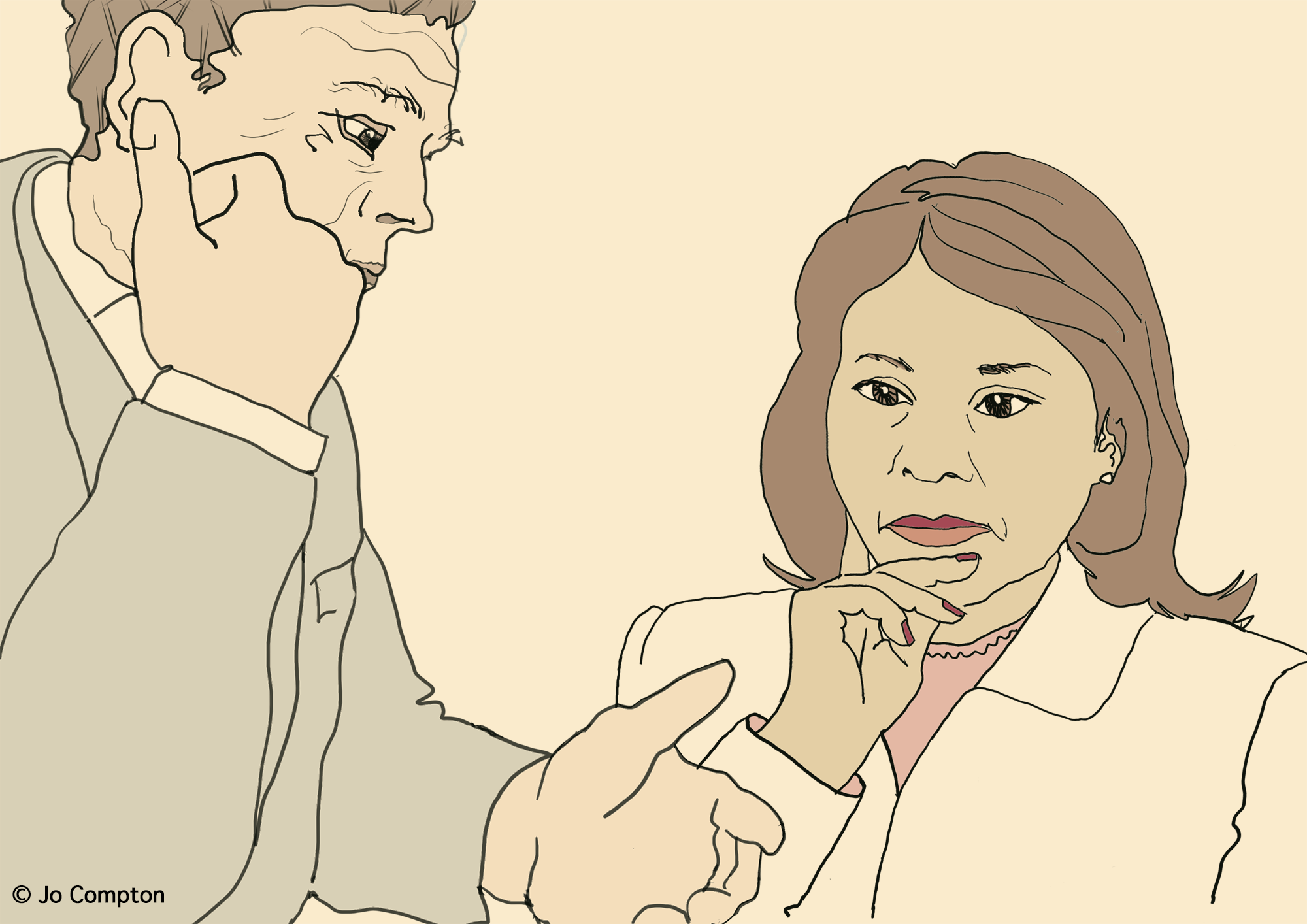
A different conversation on a Friday night
This version re-runs the challenges on that Friday night but with a better outcome. Grace and Tom feel able to acknowledge more of how they think and feel, as they collaborate to respond to the requirement to act.
Tom: Grace, are you ok? You look done in. Look, I’m really sorry. We need to do what we agreed. It’s the usual story from Gavin and Andy about waiting times.
Grace: Really? It’s crazy here. No one has had a break.
Tom: I brought you a coffee. Do you want to call Andy, he’s on call but I know he is also feeling the pressure from up top. You know what he is like – all spreadsheets and a very logical mind.
Grace: Good for him. Can you get us any help?
Tom: I don’t think so, but what can I do?
Grace: Can you try and get someone to find a bed for Mr A in bay 3 and get security to be more visible, it’s a Friday night.
Tom: Will do what I can. Can we agree when we will talk to the ambulance service? Also, do you have enough food for people overnighting? I can do something about that.
Grace: That would be great. Let’s talk in twenty. I just need to brief the team. Can you do that with me? Can you also brief Andy, we have to let him know we are not exaggerating.
Tom: OK. Twenty minutes. Let’s blame Andy.
This version is latent in the original conversation. The ‘power’ of the missing conversations to quietly define acceptable behaviour made it all but impossible to be realised – however skilled Grace and Tom are.
Four missing conversations are imagined based on a simple question:
Who could have been talking to whom about what so that this version of events becomes possible?
The missing conversations are:
Between Grace and Tom
Grace and her boss Jo
Tom and his boss Gavin.
The senior team and their reports.
Missing conversation – between Tom and Grace
This version has Grace and Tom feeling authorised to think differently together. Authority emergent from their line managers asking themselves a question:
What can I do and say to make it easier for my reports to think and collaborate more effectively?
Two missing conversations suggest themselves. One between Grace and her manager, one between Tom and his manager. Conversations in which they feel safe enough to say more about their lived experience of doing the job; safe enough to hear ideas and feedback; safe enough to think out loud and to consider changing their behaviour.
This conversation takes place after an earlier challenging late shift. It is an inquiry conversation. Both Grace and Tom acknowledge that what they do know, is not sufficient to get the ‘patient flow’ job done, safely.
Grace: Tom, we have got to find a better way of managing when things back up. I’m assuming this is a private conversation, so I will be frank. What were you thinking? You could see we were flat out. When you came down there was no time to think or have a conversation. You could see I was feeling rushed, and you just ignored the fact.
Tom: I did, I’m sorry. I could see you were near the end of your tether.
Grace: I was.
Tom: Dumb question but what’s it like to be the matron in ED?
Grace: Do you want the honest answer?
Tom: Probably not.
Grace: It’s impossible. Too many people - but each one deserves our best attention. I have the clinical stuff and then I have to do the management thing and tell people to do things I know they do not want to do or feel equipped to do. Then you come along and add to the pressure. I get that you are also under pressure but at the moment you dump it on me then I think just **** off. That’s how it feels. Sorry. You did ask.
Tom: I did. I don’t know what to say.
Grace: What’s Gavin like as a boss?
Tom: He doesn’t like failure. Hates any comments from the other execs. He has ambition.
Grace: All I can say is don’t become like him. You have to understand that when you do things like you did, the safety issues do not go away. We have to think about them, mitigate. Keep people safe.
Tom: When you hesitated, I thought you were trying to block me.
Grace: I was thinking. I had just been in resus, then you come down and I’m having to think about where we can put all these extra people.
Tom: I didn’t realise that’s what you’d been doing. You know what, next time tell me. I’m not a mind reader. I misread the situation.
Grace: My thinking face is a bit like my ‘piss off face.’ I need to work on it. Look, can we try and help each other out? Talk to the team together? Maybe work out some basic principles to guide us all when things just get impossible.
Tom: Let’s try it.
Enabling better collaboration

Missing conversation – Grace talks to her boss Jo
Grace: I could really hate Tom…
Jo: Grace. You don’t hate him; you hate what he represents. The relentless focus on task and productivity – it’s what he’s been trained to do and is rewarded for. I also know he can act as if he is way more confident then he feels. We need to find a way to gently puncture his certainty. It’s the same old thing around here: confidence mistaken for competence. I think he means well and he doesn’t shout.
Grace: Ok. You’re saying be nice. I can just about believe he understands he also has responsibility for keeping people safe. But he is so intent on getting things done and he talks so fast there are no gaps, time or space to think. I feel like the emotional idiot. I think I just sound incoherent with rage and he, well he just looks embarrassed. I want him to understand, some of what he gets me to do is unsafe. I’m fed up being the only one worrying.
Jo: To take a step back. He’s like us, a product of our work culture. Somehow we have neatly split the care stuff from the management stuff. Management – rational; nursing – emotional and irrational; and any doubt, any question, any hesitation is a distraction, so meaningless.
I get the rage, but I have to tell you focusing it on Tom is not going to help. Tom is well looked after.
Grace: Ok but what the **** can I do. I’m about done with this macho bullshit.
Jo: Maybe you can express your rage but towards a different target – the underlying assumption that safety is just for nurses. When he next piles in with his simple solutions ask him – ‘what are the consequences for safety;’ ‘what would you like to do to mitigate the risks?’
You two need to keep talking and I want you to avoid the fight if you can. It’s a distraction. I do know it’s not all down to you but that’s how it can feel when its busy down there. I need to take some of this up with Gavin and Lisa. Not sure they will thank us for making things more complicated but let’s talk next week. You are good at your job Grace.
Missing conversation – Tom talks to his boss Gavin
Gavin: Tom, I’ve had Jo in my office about last Friday. Not sure why anyone is still worrying about this. You did the right thing. There was no choice and people need to deal with it. Your job is to keep things moving.
Tom: I know, but we did leave Grace and the others with a real headache. It was chaos. Did Jo have any suggestions? As in what would make it easier? And, as you say, it will just keep happening.
Gavin: She said we were ignoring the safety risks. We had a bit of a row. When she calmed down, she agreed that flow needs to be expedited.
Tom: And I can guess she said safety is everyone’s responsibility.
Gavin: She did. I don’t want this escalating. We are judged by crude measures; we need to be on top of this.
Tom: What pisses people off is when we turn up, cause chaos and then **** off. It doesn’t feel right. I could see how fed-up Grace was last time. Maybe I need to find the time, if you agree, to have a conversation with her about how we can better respond when things get backed up. Would let Jo and Lisa know we are taking the risk-sharing issue seriously. Could also save time in the long run when it all happens again.
Gavin: Ok. I need to go. Keep me posted.
Creating a more helpful work culture

Just as Tom and Grace need their line managers to authorise a different way of talking and managing; so, do Gavin and Jo. Therefore, a critical missing conversation is one within and with the CEO and her leadership team. A conversation based on the following:
What can a senior leadership say and do to cultivate a more enabling, collaborative and safer work culture while maintaining performance?
A missing conversations – the senior team try to make it safer
The Chief Executive (Lisa) is talking at the monthly Managers Forum, which includes Tom and Grace.
Blaming individuals, holding them to account, has unsurprisingly led some people to assume it’s safer to be quiet; to not share and talk about what they know, think and feel about getting the work done.
Let’s be clear this is a slippery slope. Silence and not listening always leads to something bad happening and keeping people safe, is why we come to work.
I do want to continue to focus on performance but I also want to think about how we talk and listen to get the work done. Sometimes, there is not a lot of listening going on and I know I have let you know directly and indirectly there are some things I don’t really want to hear. This is a mistake on my part.
And before anyone thinks this is about ‘soft skills,’ let me stop you. I am not talking about being nice or just agreeing. That is not it. I will judge success in terms of people feeling safe enough to question ideas, to be a bit awkward, in well-run meetings, leading to well executed and evaluated interventions.
Leadership around here is about enabling people to talk, not just telling them what to do; and critically not assuming that silence is agreement. I want you to go to where the difficulties are.
Enough from me. I, we (glancing at her senior team) are here to listen. I want to pose a question for this Open Space[6]. What do we now need to do to balance our attention on task and relationships? What do we need to stop doing, start doing, learn how to do and just wait for? Let’s talk.
Concluding notes
This senior sponsored conversation is critical. A means to demolish ways of behaving and thinking that no longer work but endure because of habit. A step towards modifying the culture in relation to a deeper understanding of what it really takes to manage something like too many ambulances and too few beds on a Friday night.
A first step is authorising and requiring people to have the sort of ‘missing’ conversations imagined here; and a senior leadership group that goes beyond telling and imagining; to doing and showing. A leadership that knows it’s going to have to change aspects of its own behaviour. One that does not ask of others what it is not prepared to do itself. A leadership that faces a fact about its power. That how they choose to behave, speak and think about silence, is the major determinant of the work culture that teaches people about who can speak to whom about what. Paying attention to what is taught around here and why, makes everyone a bit safer to speak when they are not sure, and listen when they may not want to.