HANDBOOK 1
Finding your voice
What is being asked of me, given my values and know-how, in this situation? [4]
Who or what is ignored or silenced if I do not speak?
A place to start is to investigate how we have learnt to use our voice. Then, to examine the role of silence in our conversations and what to do when it feels unsafe to speak. Finally, to explore how to be ‘constructively awkward’ . To say what you need to say, in a way that is confronting and sustains and builds conversation.
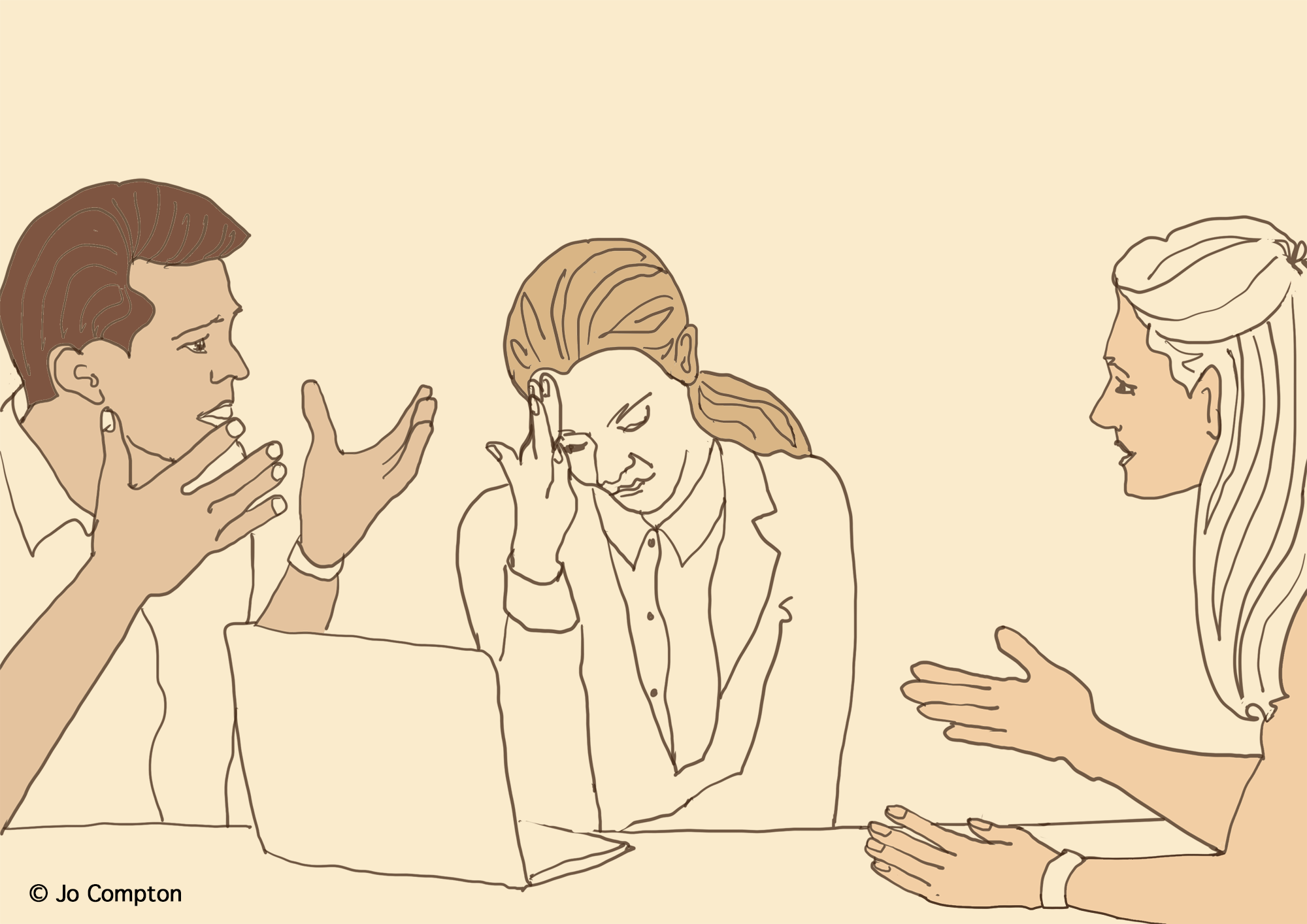





1.1 Understanding how I have learnt to use my voice
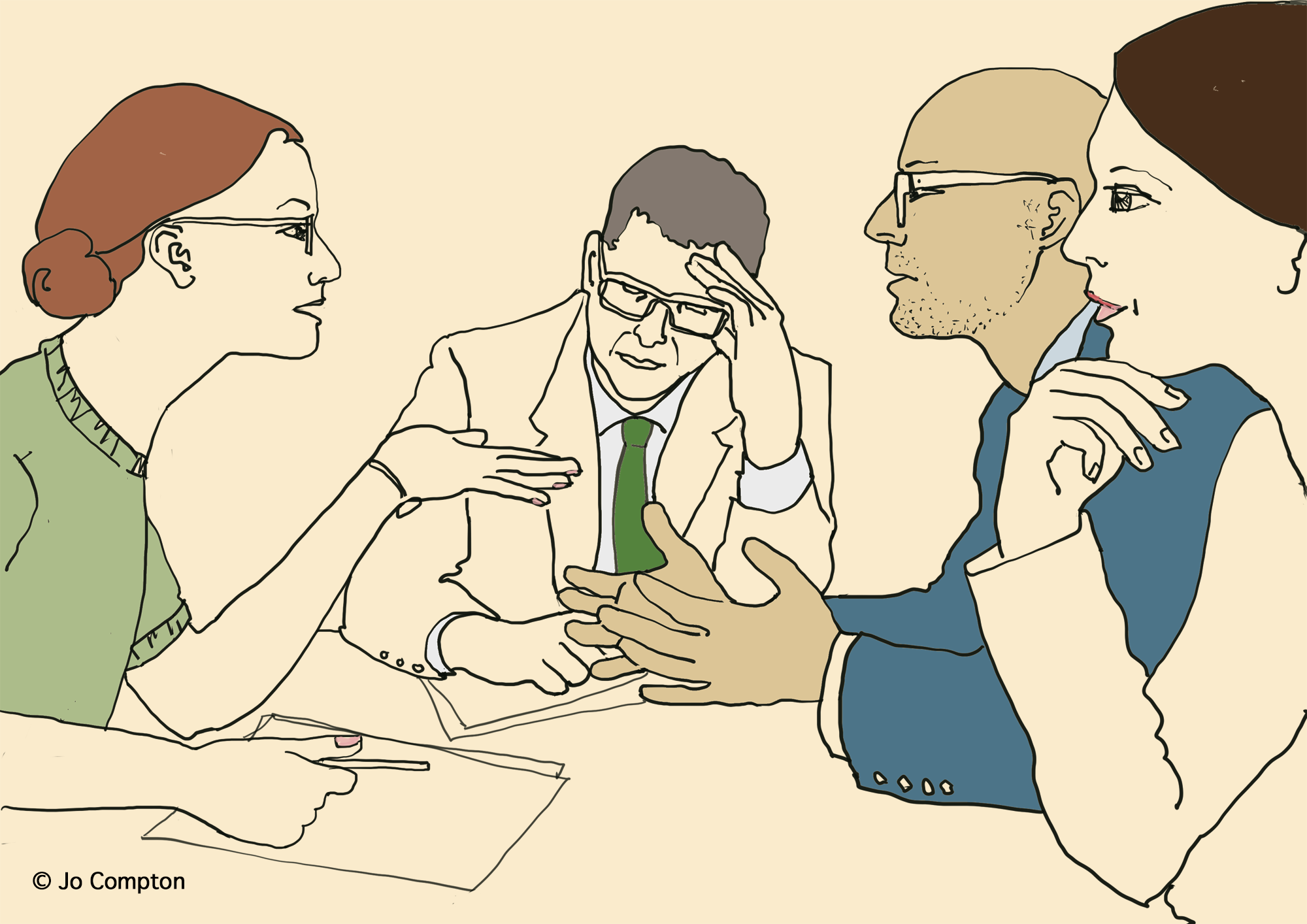
When we speak up in a meeting, our voice, tone and language are shaped by prior experience. What we have learnt about how someone like us, looking and sounding like us, should speak to whom about what.
Examining this ‘learning’ means we can loosen the grip of any constraints we notice in the present. Reducing the risk of going quiet and disengaging.
Working through these questions is part of a reflective practice. A way to remember our voice is significantly determined by others; that rules can be modified when they do not work for us in our work roles.
- What was I taught about how I should speak to people in authority?
- What was I taught about which subjects were appropriate?
- Who taught me the rules of conversation?
- What happened if I questioned or broke the rules?
- What did I learn about arguing with people in authority?
- What did I learn not to be quiet about?
- Who and what helped me to express myself?
- What did I learn about how people in my profession should speak?
- How did I learn which subjects were appropriate to talk about?
- Who taught me the rules?
- What happened if I broke the rules?
- Who was I expected to listen to?
- Who was I expected not to question?
- What did I learn about how I should speak to whom about what?
- What events ‘helped’ me learn the rules?
- How do the rules differ for individuals, for example by seniority, ethnicity, sexuality or gender?
- Who am I expected to listen to?
- Who am I expected not to question?
- How did I find out about the no-go issues, people or events around here?
- What happens if I question the rules?
- What happens if I break the rules?
1.2 Understanding how evolution shapes our voice
- Notice the hierarchy in the room. If my boss is present, I will think before I speak. I may not risk spontaneity or saying anything that contradicts what I imagine they think; more so if their boss is present.
- Assume that being in the group is safer than being outside. I know, in a hostile environment, it is better to be ‘in’ – and some work environments are hostile. Therefore, I will moderate my behaviour to minimise the risk of eviction.
- Moderate my behaviour to ‘fit in’ – to the extent I may hear myself agreeing to a ‘fact’ or decision I know is wrong[6].
Noticing when we slip into these assumptions and behaviours; how they can lead us to overestimate the risk of speaking is another element of a reflective practice. A reminder that the way we currently behave does not exhaust the possibilities of how we could behave.
1.3 Examining the silences in conversations
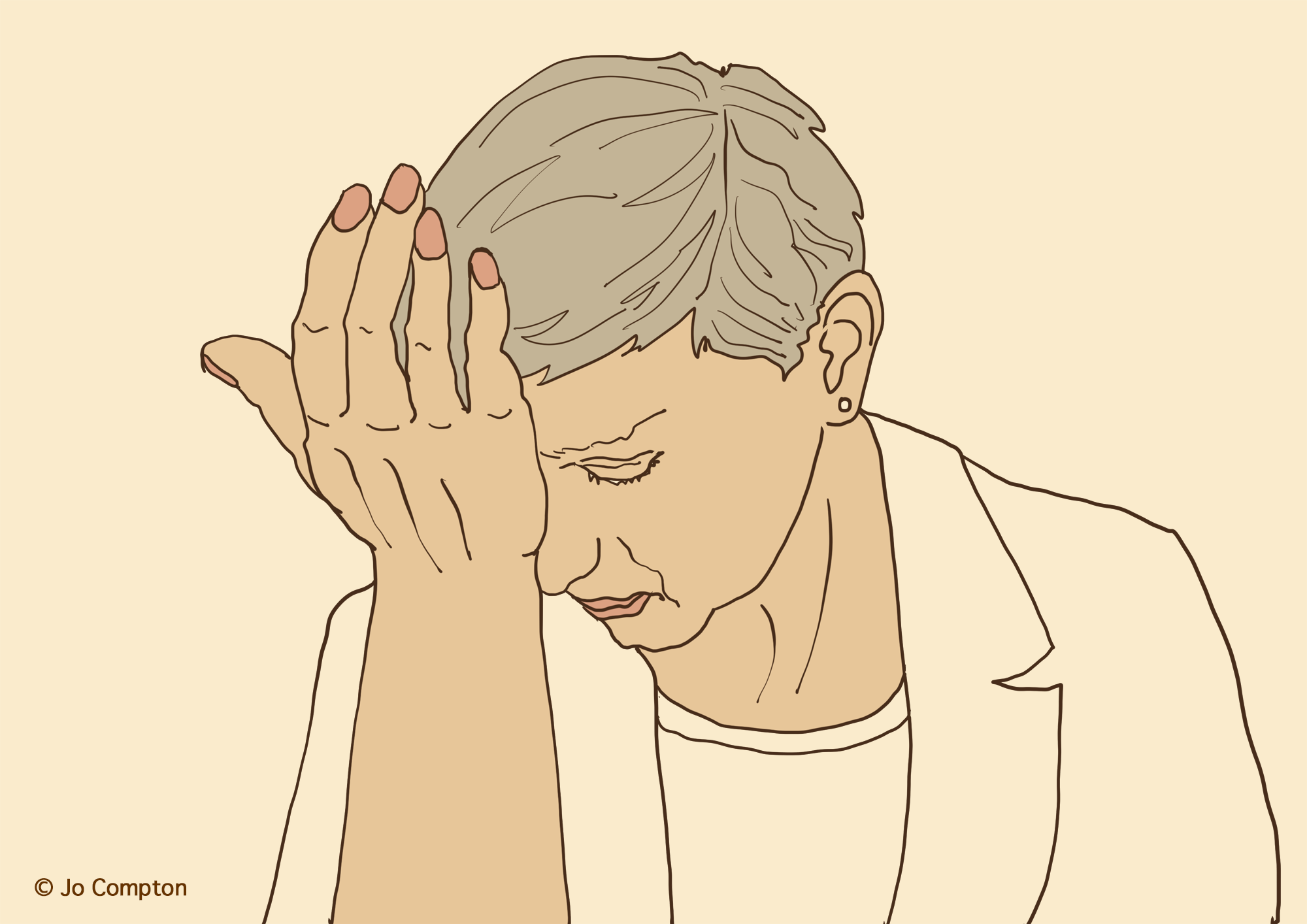
Silence is ambiguous. It signals thoughtful acceptance of what is happening and it can signal we do not feel safe to share our thinking; to question assumptions and behaviours. Developmental and evolutionary sensitivities can lead us to conclude silence is the safe choice right now. Even though we risk our silence being taken as our agreement and support.
To develop an ear for silence, try this observation exercise, designed to test the idea that silence is intentional and has meaning beyond the individual.

OBSERVATIONAL TASK
In a meeting (and when it is safe to do so), move your attention from the people speaking to those who are not.
What sort of silence is it?
What is being communicated about how safe people feel?
Who and what is at risk of being ignored because of this silence?
Use this list to help you name the silences.
Types of silence
I have no need to speak. I'm important, I do not need to speak to get my way.
I just keep talking, taking airtime away from others - making it harder for them to speak - without ever revealing my real anxieties.
I'm too anxious to speak. I feel unsafe. Sorry, I need to take care of myself.
I'm protecting others - inside and outside of the room. My relationship to them is more important than me sharing what I really think.
I'm exhausted, I give up. Do what you like.
If I were to speak about what I know, it would blow apart our cosy consensus and I would be blamed for not being loyal.
I'm not really good enough to share my opinion here.
I'm part of a group that assumes the task is to get along. I'm not going to disrupt this lovely feeling with any awkward questions.
These overlapping descriptions help draw attention to how safe people are feeling and how relationships in and outside a meeting can shape a conversation. The more the factors that help and hinder speaking up are understood, the greater the chance of developing practical ways to make it safer to speak and listen more.

CASE STUDY
Explore how organisational culture can cause people to silence themselves.
1.4 I’m thinking about speaking up
- What is being asked of me in this situation, given my role and profession?
- What is the cost to me if I stay quiet?
- What is the cost to others if I stay quiet?
The first question is a reminder that our particular expertise alerts us to things other people may not be able to notice or may wish to ignore. So, if not us, who will say anything?
The second question points to the anxiety we risk when we do not align to our values; to our duties.
The third question is also linked to our values – the extent you care about others. Facing these questions, loosens the grip of historic influences on our voice.
When I talked to people with a reputation for being ‘constructively awkward’ and hard to silence, they talked about these reflexive conversations. They also described a set of skills and knowledge that helped tip the balance and speak anyway; even when they anticipated a hostile reception because they were offering an ‘uncomfortable truth’[7]. This is what they described.
CASE STUDY
Explore how speaking up can bring overlooked issues into the conversation.
Prepare yourself
Read the papers. Know the data; the arguments; the gaps in the analysis, where the bias is. Know who or what is at risk of being ignored if current thinking is not scrutinised.
We are more likely to speak up if we are doing it for others. People who have less power, habitually ignored and silenced. Give them names, make them real, not ‘objects.’
Write down your opening comments; map the main points to protect your thinking against anxiety washing away your words.
Be confident, not stubborn. You can claim to know best what you think and what it means. However, you will be easier to hear if you assume that once you have spoken, others will have their views about what is right. This may change your own thinking. The objective is debate – not a who knows best what’s best argument.
We can silence ourselves if we listen to our internal voice reminding us how useless we can be. We need to be open to doubt. We may be wrong and new information may emerge. Changing your mind is not incompetence. A powerful sense of being incompetent may also be a clue about what others dread. That what you are drawing attention to will make them feel/look stupid.
OBSERVATIONAL TASK
Ask questions – take a bold approach to helping people share their thinking. Assume that people’s ideas are not as fixed as they appear. Questions seek out the spaces where debate and inquiry can happen. Try the following.
Say something about your thinking.
What led you to this approach / idea / assumption?
What makes you / us so sure that our approach will work as planned?
Based on your expertise, what do you think is less certain?
In your opinion, what could we be missing or trying to avoid thinking about?
What do we need to look out for or be worried about?
What does the evidence suggest is a way forward?
Mobilise your rage
I feel this when I know I have been treated unjustly. The target of my anger is not limited to the person or organisation I think responsible – I hold everyone responsible. I can easily hate everyone.
I feel this when ‘that lot over there,’ who look and sound different, are doing this to ‘us.’ We believe that they, who owe us a duty of care, have ignored, disadvantaged and abandoned us. So, we just want to wipe them out. We won’t listen to any arguments to the contrary.
I feel this when I have no power because ‘that lot over there,’ who look and sound different, have it all. I hate them and I wish I were one of them. I cannot get them out of my head. I’m the victim here. There is nothing I can do but hate.
You need to understand how special I am and I should be treated as such. So, when you and the system you stand for doesn’t treat a person who looks and sounds like me properly, I’m going to make sure you know.
I feel my rage. This is wrong, but I’m not so taken over by it that I cannot think. My purpose is to fight injustice, not inflict harm or pass on pain.[8] I just need to say this; I can do no other.
CASE STUDY
Explore how speaking up can challenge assumptions and encourage deeper thinking.
OBSERVATIONAL TASK
Keep an eye on how you are behaving – Speaking up is never going to be perfect. So, monitor and adjust how you are behaving as you go.
Ask yourself:
Is my voice too loud?
Do I sound angry?
Am I talking so fast that people cannot follow?
Do I need to take a breath?
Do people look scared, silenced; ready to fight back?
What small changes in my tone, volume, behaviour would help them listen?
Evaluate
Notice who is quiet and what kind of silence it might be. Use the list above and use open questions to make it safer to speak.
If it’s never going to be perfect, you may need to apologise. A couple of useful ways to acknowledge this and keep the conversation going:
- Ok, I could have been clearer, but I still need some help. What am I not understanding about this situation, your thinking or approach?
- Can you help me understand your thinking? You know it best.
Do not be too hard on yourself if it goes badly, as it sometimes will. Noticing and speaking about issues others want to ignore is difficult work. People may refuse to listen or hear it as an attack rather than an invitation to a conversation.

Rage has an important role in speaking up. First notice its unhelpful forms to try and harness the power of ‘Lordean rage.’
1.5 Concluding note
We can take our precious voice for granted. So, when we lose our words, we can be derailed and go quiet. Understanding how someone like us should talk to whom about what and being curious about silence, is a form of inoculation. We build antibodies to resist people and cultures that would prefer us quiet. We can draw on the skills of the constructively awkward to keep thinking and scanning for opportunities to say it differently, get this issue out in the open and talked about.
Continue to Handbook 2