HANDBOOK 3
When things go wrong
Most conversations go ok. We say what we need to say and people listen. This third handbook describes what to do when it doesn’t go well. When someone is silenced, there is hostility or indifference. The handbook will help you look beyond the details of any exchange; to avoid a superficial analysis; to enable you to examine how the acts and omissions of others and wider work culture have also contributed to ‘events’.
The handbook is based on a moment of failed communication in a busy accident and emergency department (ED). A short conversation that left one person, Grace, feeling blamed and unable to work for months.
We begin with the conversation reported to me by Grace and my first reading of the events described. A superficial reading that failed to understand why two capable people miss-communicated on this particular Friday night.
I develop a second reading to dislodge my usual patterns of thinking; make the familiar strange, to widen the scope of my inquiry. Using my deeper understanding of events to imagine a better outcome.
The handbook is based on what I learnt in my supervision – to develop successive readings of the same material; to make a familiar story, strange and unfamiliar[12]. A tool to look beyond habitual ways of thinking and interpreting events. To know that this is more than just another bad night in the ED. Something we seem to have got used to and stopped being curious about.
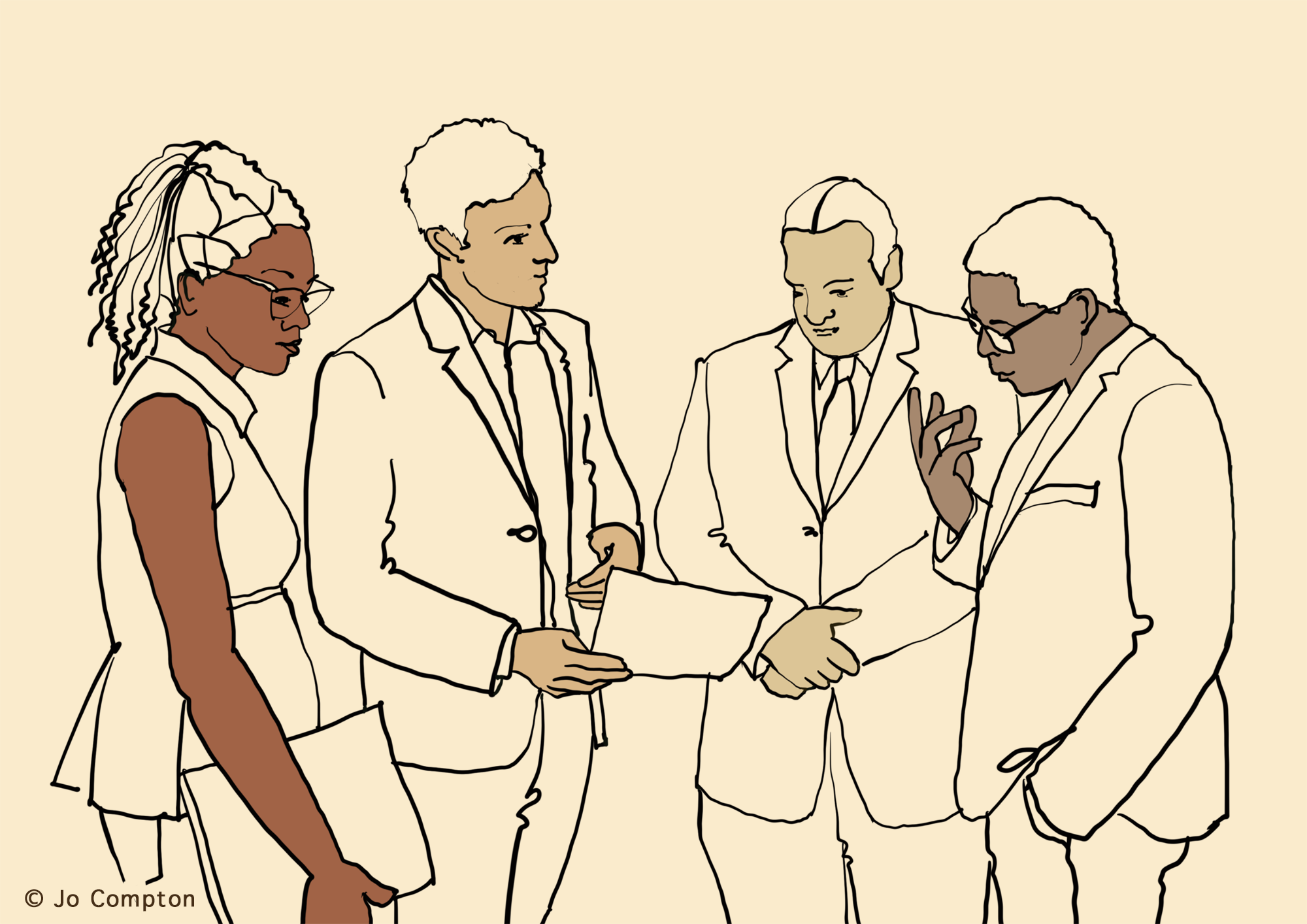





3.1 A short Friday night conversation
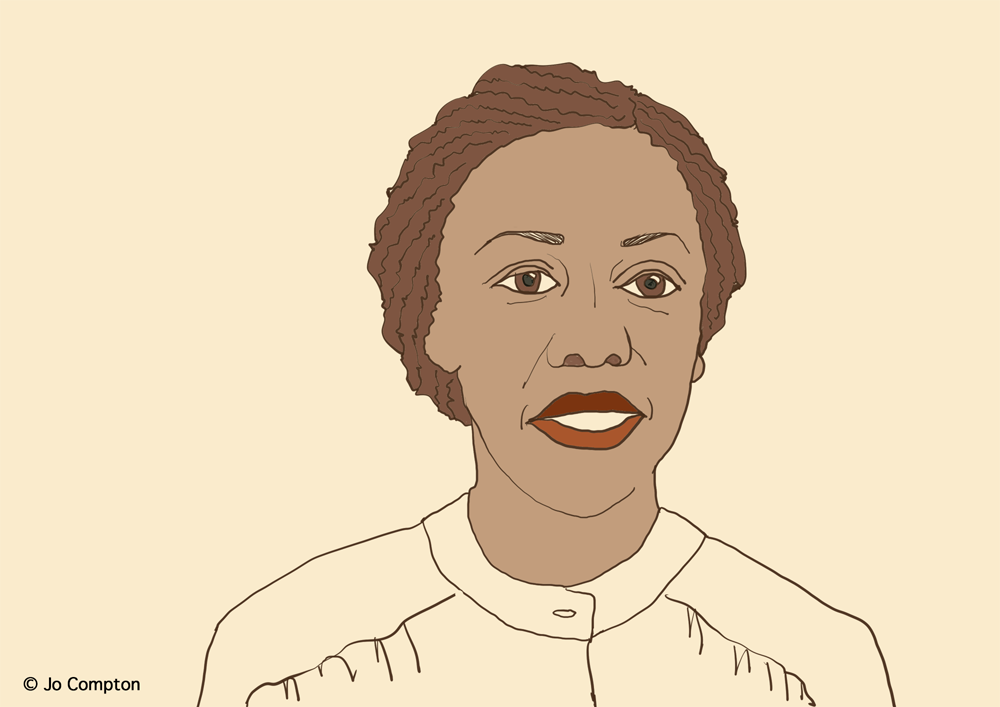
Grace’s is a senior nurse in the emergency department (ED). Her job is to provide ‘visible leadership,’ be accountable for quality and safety and build relationships with clinicians and senior managers. Tom is a senior manager. His job is to collaborate with clinical staff to ensure services are efficient, safe and effective; and to implement the decisions of the senior leadership team.
As Grace’s shift begins, she scans the bays and corridors and notes everywhere is occupied. Later, as she is clearing up after a cardiac arrest she sees Tom walking confidently towards her. Although it’s been a few hours since her shift started, she feels drained. As she speaks, she hears the irritation in her voice.
After the conversation, Grace walks away as the ambulance trollies are wheeled into the corridor. She feels useless and retreats to the office. After going sick she is referred to HR for ‘support and counselling.’
-
Grace: Tom, what do you want? Pretty busy down here.
Tom: Hi Grace, busy out there. We need to empty the ambulances now. Sorry.
Grace: We don’t have the space. They’ve got to wait a bit longer. Ok?
Tom: The word’s come down. We have to. Get them back out.
Grace: I know, I know. But look you can see we just do not have anywhere to put people or dare I say, enough staff. Who authorised this?
Tom: Andy, he’s senior ‘on call.’
Grace: Does he have any idea what it’s like down here? You need to tell him. We can’t deal with anymore. It’s not safe. Just look Tom, where would you put people?
Tom: I know but I’ve been told to get it done.
Grace: It’s not safe.
Tom: I do see how busy it is but it’s not safe to just leave people in the ambulances for hours.
Grace: Tom, listen. I know but please understand, I’m not being difficult. We will not cope. I’m going to have speak to Andy. To make sure he knows what’s going on.
Tom: Sorry, already decided.
Grace: Tom. Wait one minute. Please.
Developing a first reading
If you’re a manager like Tom, used to making hard decisions, you may think he did his best. If you identify with Grace, you may have a different response. A first reading is an immediate ‘take’ on events. We allow our bias to speak, so we can hear how our assumptions ‘help’ us ignore and silence aspects of the story. A first step towards making the familiar strange; to notice the gaps and omissions in our account.
Grace is tired. Stuck with a professional principle: just keep going. Work has become one shift at a time. She is good at supressing her emotions. She is required to rapidly transition from resuscitating a named patient to thinking about the safety of everyone in the department.
Both behave as if they do not have time to stop and think about why this problem of ambulances requires one to win and the other to lose.
Examining a first reading
I am trapped in the detail of their exchange. As if all the clues are in the dialogue that will explain this miscommunication. However, a problem remains. How do these well-meaning skilled and experienced people end up here – with one of them unable to work for three months? The work now is to look up from the first reading, widen one’s focus and give up on simplistic explanations. For example: Grace just needs to toughen up, or Tom needs to be nice and listen more.
A second reading begins with a question – what else is going on and what am I missing? A question that requires recognition and acknowledgement of how our preconceived ideas bias any reading.

OBSERVATIONAL TASK
First notice your bias
How do they each describe the problem?
Who do I assume is in the wrong and why?
Who has my sympathy and why?
Who and what am I at risk of ignoring?
How do they help each other speak and listen?
What is the problem these people are grappling with?
‘Instrumental’ is one person telling others what to do. Appropriate when the problem is understood and there is agreement about what needs to be done.
An ‘Inquiry’ conversation is useful when collaboration will help people to share what they know about a problem. Help build consensus about what may be going on and what could help. Help people to learn and adapt as more is understood about the situation and what works.
Developing a second reading
The purpose of the second reading is to make the familiar strange. To ask what I am missing by assuming I know what is going on here. A metaphor can help.
Tom and Grace are actors, delivering the ED evening performance, to a packed house. Off stage, are the director, the producers, accountants, script writers, dialect coaches and designers. If it goes well, or the critics pan it, they must also step forward, take a bow or think about how their acts and omissions have contributed to the performance.
The metaphor brings into focus other voices and the wider organisation. The norms and values that shape the way conversations ‘work’ in a team or organisation.
Tom’s authority is anchored in his hard-won management experience and in his association with the senior team. An association that empowers and traps him. Traps him in the assumptions about how someone like him should behave, as a manager, when talking to someone like Grace, a senior nurse. Deviation from the script feels like it would risk being accused of dissent and disobedience, lacking the right stuff. What he assumes he is hearing in Grace as she questions him.
The work culture is active in the background. Quietly shaping events on this Friday night. In particular the assumptions and norms, laid down over time, about who can talk to whom, about what, when, with what words and tone. Including assumptions about the role of nurses; managers; men and women.
A reason Grace’s response is perceived as disappointing may be another cultural norm. The unspoken expectation of the role of matrons, nurses, women, in this organisation. That they are the ones to promote and sustain harmony and good feeling in others around here. To make it ok; bearable. To do what has been described as the ‘emotional labour;’ leaving Tom free to do his ‘thing’.[14]
Tom’s thing, his skill is to be decisive and make decisions. A valued trait in the culture. A skill suited to a situation where the problem is defined and the solution is agreed and just has to be implemented well, according to policy. It is less suited when the issue is complex, characterised by conflicting demands and no simple solution – like flow through a busy ED.
A sub text of the script on Friday is to uncouple the management of targets (e.g. wait times) from clinical practice. Grace replicates and reinforces this split, when she does not tell Tom about the resuscitation and the physical and emotional impact on her. All in a day’s work, not worth noting. So, she does not think to say she needs a few minutes to recover her equilibrium because this could sound unprofessional. Like Tom, she is trapped by the script about what it is to be a competent professional in this place. Clinicians, like managers do not express doubt or hint they cannot cope. They just get on with it.
Grace’s walking away, is to resolve an impossibility. She cannot do her job – manage flow, work with managers and ensure people are cared for and feel safe. Unwittingly her connection to Tom. Both feel their job and professionalism are on the line. Both assume there is no time to think. Time to explore the latent possibilities in ‘their’ situation. No space to improvise, to develop a different script to ‘hold’ the conflicting demands of flow, performance and safety, they each hold separately.
Grace and Tom had few choices. The interesting question is why. Blaming them and Grace in particular, silences any curiosity about how their lack of choice was also the consequence of the acts and omissions of those off stage; months, weeks before.
Notes on a second reading
A second reading looks beyond the obvious, is sceptical and curious about simple explanations. It widens the inquiry, constructive awkwardness in action. However, pleased we might be about our second incisive analysis, we should remember that any reading is always incomplete. The test is of a second reading is, does it probe below the surface of events we have been asked to investigate? Do we hear more of the issues and people who may be ignored and silenced?
Metaphors are a useful device to keep the familiar (‘just another communication failure’) strange. Conceptualising the exchange between Tom and Grace as a performance, as theatre, opened up the cast list. A reminder to think about the power of those off stage to influence the thinking and actions of those on stage and how the work culture also shapes behaviour and events.
3.2 An alternative Friday night
How can a second reading be used to plan to reduce the risk of people like Tom and Grace not communicating? One way is to imagine a better outcome, to think about who should be talking to whom about what, to make this a plausible version. Where Tom and Grace face similar challenges and dilemmas but have more choices.
-
Tom: Grace, are you ok? You look done in. Crap timing but we need to get things moving. Andy, despite our conversation with him is worrying about how the delays are looking. I have asked him to come down but no idea when. Either way, be good to get things moving as agreed.
Grace: Just need to state the ****ing obvious but it’s crazy here. No one has had a break. I need a break.
Tom: That is why I brought you a coffee. What can I do?
Grace: Can you get us any help?
Tom: Tom: No, sorry. Anything else?
Grace: Find a bed for Mr A in bay 3 and ask security to be more visible. A few people looking for a fight out there.
Tom: Will do what I can. Can we agree when we will talk to the ambulance service?
Grace: Let’s talk in twenty. I need to brief the team. Actually, can we do that together? Can you also brief Andy, just to remind him we are not exaggerating the pressure and that the safety concerns have not gone away, particularly as we are using the corridor again. I know he know this but equally I think he can forget when the pressure is on.
Tom: OK. See you in twenty minutes. Maybe remind people this is coming from Andy and SMT?
3.3 Who should be talking to whom about what –
The Manager’s Forum

The following sections describe the missing conversations.
First up is Lisa, the Chief Executive, talking at the Manager’s forum several months earlier. She signals her intention to change the tone of the organisation’s conversational culture. An act of leadership to make the other conversations, I describe, possible.
Blame, endless talk of accountability has, unsurprisingly, led some of us to assume silence is the safer option. Maybe. However, we know that when we fail to speak, risk increases. We have to stop turning a deaf ear and blind eye to how we talk to each other when things get fraught. Our job is to keep people safe, care for them, and work as effectively and efficiently as we can.
We have to focus on performance, but we need to change how we talk and listen to each other as we get the work done. We have a habit of not listening when someone questions what we think is right; we label people who want time to think as ‘dithering’ or something worse. Let me be clear. I have contributed to this culture, but we need to change it. I want leadership around here to be about two things. Enabling delivery, conversations and collaboration, when existing solutions do not work or cause harm.
This means thinking about how we run meetings, how we behave when challenged, how we ask those who are silent to engage. If we make it safer to talk, share different ideas, collaborate I think we can do what we are here to do.
Enough from me. In the time remaining I want to pose a question to consider in your teams - What needs to change in your team and in the wider leadership for us to listen more; ignore less; stop silencing each other; and collaborate to get the work done on time, and on spec? It’s not a simple question but it is an important one. We reconvene in two weeks, when I want to explore the ideas and insights you noted.
Let’s imagine the conversational culture evolves as she wants.
3.4 Tom and Grace have a missing conversation
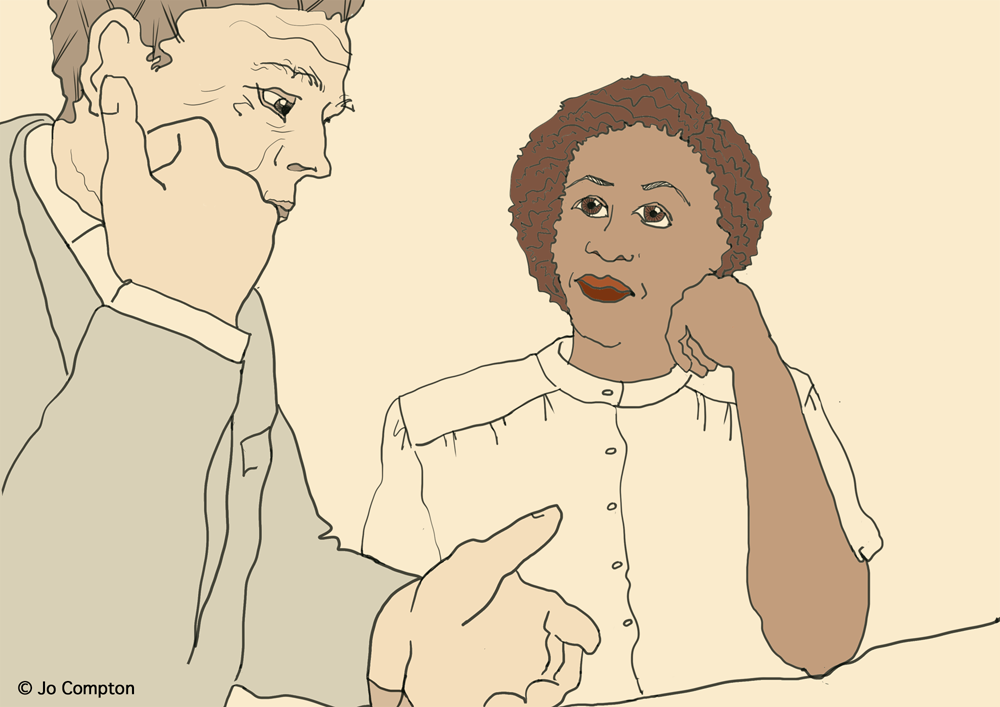
Tom and Grace also need to work at changing their conversational style. They decide to sit down on a quiet morning to agree how to collaborate more and fight less, when they have to manage the competing demands of targets and safety, when it just feels impossible to get it right.
-
Grace: Tom, we’ve got to find a better way of managing things when they back up. I want to speak, frankly. I need this to be a private conversation between mates or at least colleagues who know how ****ing hard it has been over the past few months.
A few weeks ago, when you came down to say the ambulances had to be emptied you could see we were flat out. What were you thinking? Couldn’t you see how busy it was? I know you notice this sort of thing. I was so angry. I felt completely silenced.
Tom: I did notice and I’m really sorry. I could see you were near the end of your tether. I had just had a difficult call with Andy. He was adamant, despite me saying it was too busy and we needed time to think, otherwise it would be the usual mess and recriminations.
Grace: I hadn’t realised you were getting such a hard time. What’s exhausting is it never ends, never over. It just feels impossible – hitting the target, do our best for patients, look after the team. Repeat. Some of my people are beyond exhausted and SMY behave as if sometime soon, it will be back to normal.
Tom: What make it impossible is that it feels like it’s down to us. Not helped by Andy being my boss. He’s ok but ambitious and very wary of any one in SMT thinking he’s not up to it. He can have fixed ideas and can ask questions as criticism.
Grace: At least you’re not like him, well, not yet. So how do we talk to him about the fact that questions of safety do not disappear when we just focus on hitting targets? Do you think he gets it is both/and, not either/or. What do you think, you know him well?
Tom: Not sure anyone knows Andy that well, but we could try a couple of things. Why don’t we just meet with him? You’re good at talking about the safety stuff and maybe you bring Jo along? They’re both in SMT and, since the forum, maybe we have permission to ask them think differently and understand you and I have limited options when it hits the fan, and that is not just down to us. We are asking for their help to think our way to a better approach.
Grace: Let’s try it but let’s first talk to the team and get their ideas. Will strengthen our hand when we talk with Andy and Jo. Will that work? I will talk to Jo this week.
Tom: Yes, and I’ll start working on Andy.
3.5 Grace and Jo have a conversation

For Grace to feel she has the authority to talk to Tom differently, she needs to know her manager has her back. This means Grace and her boss Jo have to have a different conversation.
-
Grace: Tom and I have been talking about managing the wait time better. Last time he just came down and offloaded. It was awful, like he didn’t notice how busy we were. But we have been talking, after the Forum, and we want to try a few things.
Jo: What are you thinking?
Grace: We are the people on the ground. We need the space and authority to decide when to off load patients, when to wait and what’s needed to manage the risks. I need to know you have my back because the pressure to act quickly, meaning no time to think, is intense. Waiting is not us dithering or trying to be difficult. Tom and I know the targets are critical, but we’ve got to keep people as safe as we can.
Jo: I understand. What do you need from me?
Grace: Talk to SMT and explain what we want to do and why. But maybe before that, would you agree to an informal conversation with Tom and Andy? Andy particularly can obsess about targets which in turn influences Tom. I feel like I end up holding the patient safety agenda as if I don’t care about the targets. Having you there would make it easier to have a more open conversation, like Lisa talked about.
Jo: Let me talk to Andy first. The split between targets and safety is pretty ingrained down professional lines. But it’s a good idea but you have to promise that whatever happens I won’t be caught out by any breach. I need to know.
3.6 Tom and Andy have a conversation
Tom seeks a similar conversation with his boss Andy.
-
Andy: I’m not really sure why you want to change things. It’s not like we have choice about the wait times. Sometimes you just have to do what’s needed, even if people don’t like it. I thought you understood that.
Tom: I do, I did, I’m not sure. Seems to me someone has to deal with the consequences and…
Andy: But it’s not you. Your job is to keep things moving.
Tom: I’m just looking for you to ok a few small changes, on a trial basis. I just think we are vulnerable to being seen as target obsessed and more importantly, that we can ignore safety.
Andy: Jo was in here a few days ago, saying something similar. Asking me what I thought, suggested we all meet. All very interesting but what the **** will we do next time there are twenty ambulances parked up and everyone is shouting for them to be released?
Tom: It’s not about pretending its simple. Just maybe we could manage things differently. Hence the meeting. Each time we have ambulances backed up the situation in the ED is different so maybe those managing a shift could have more have scope to make the best decision possible, based on what’s really going on. Try and manage both the flow and the safety agenda differently.
Andy: at the moment is sounds a bit vague. How will I know what’s going on?
Tom: you know I will keep you briefed. I’m also going to need your input.
Andy: I’ll agree to the meeting but one proviso. If I think it’s not working, it stops.
3.7 Concluding note
What is imagined here is what can become possible if you think about the missing conversations. What can change if those working ‘off stage’ can accept they are also in the frame when communication fails; are in a position to change conversations for the better. Got to be better than simply blaming individuals or unleashing a cacophony of top-down interventions demanding that people must speak up. Most people would if they could.