Workbook 2
Ideas in action to help you say more
These are designed to help you review, critique and apply your own thinking.
These are case study-based examples, based on my doctoral research interviews with community activists, charitable sector and NHS leaders. See my Prof thesis at Middlesex University here
Talking about unacceptable delays
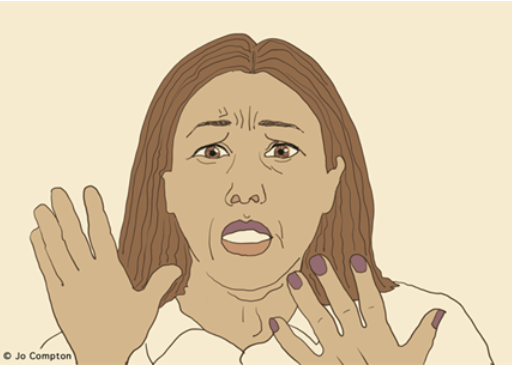
This is an example drawn from the English NHS. It shows that, no matter how senior and capable people are, we all need to feel safe enough to speak, particularly if our own practice and behaviours are the topic.
I have been invited to this meeting because of my role on a patient safety campaign. My task is to try to find out what people actually do and say when faced with a safety issue they have identified.
The meeting is chaired by Ania, the medical director of the hospital. It is her responsibility to coordinate the clinical voice when it comes to keeping people safer. She welcomes everyone and sets out her reason for asking them to attend. She needs their know-how and best thinking to understand why there is a delay in the treatment of a small number of patients with sepsis.
She outlines her understanding of the situation, introducing her words with the caveat, ‘This is just my take.’.
Ania: Our policy is based on good evidence, and we agreed it back in May. But maybe we did the usual, and oversimplified the context? Each ward, each department, has their own way of doing things – even the time of day, or who is on duty, is part of this variability. What do we need to talk about to improve things? What am I not understanding about this delay in treatment?
And before we get into that, let’s agree that we are here to speak freely. This is an informal and confidential conversation, convened by me, between colleagues. At the end we can agree what we want to make public, in terms of recommendations. Is that OK? We have 45 minutes, and I would welcome hearing from everybody.
The conversation gets going. Mike, a senior clinician who is usually talkative, remains quiet. He looks uncomfortable as Miah, an experienced ward manager, shares her thoughts about the timings required by the policy and what can happen on her ward.
Miah: The junior doctors are quick at responding, prescribing and treating. There’s a big improvement. But what I’m noticing – and this is not a go at anyone – is that when a more senior person is involved, there can be a longer delay between prescribing and treating. Sorry, but it’s just what I’ve noticed.
Ania: Miah, I think you’ve said something important. What have others noticed?
Other people confirm Miah’s tentative observation. After 15 minutes, Mike speaks.
Mike: OK, I need to say something, but can we keep it here? (The group agrees.) I think that maybe it’s because some of us are not as familiar as we should be with the administration kit. If I’m honest, I’m out of practice. I think sometimes it’s better, maybe safer, to leave it to someone who’s more familiar with administering intravenous medication. Sounds bad when I say it out loud.
Ania: No, Mike. It’s a case of ‘there goes all of us.’ I’m meant to be at the top of my game, but I can’t even do some of the simple stuff I knew when I first started. Maybe we need a way to revise our skills without feeling like complete idiots.
Mike: We need to do something. Could we approach people informally, maybe develop a programme for those of us who are old and wise but clumsy?
Miah: You may not be the only ones who have gained some skills but lost others. If we just make it a doctor problem, we’ll put people off. I’m sure it’s an issue that’s relevant to all the clinical professions.
The group found a way to speak and collaborate on finding a way forward because Ania used her authority to establish sufficient psychological safety[7]. before diving into a tricky conversation.
She understood that anxiety about speaking up is felt not only by junior or less experienced members of a team.
She coupled her authority with facilitation skills: she asked for a conversation anchored in enquiry, seeking people’s ideas about the reasons for the problem rather than putting forward her views on the issue or its solution. It’s an approach associated with what organisational and strategy consultant Edgar Schein has identified as ‘humble leadership.’ [8]
In brief, humble leadership is being authoritative and accountable while having the humility to know you don’t have the information to make good decisions. It is about asking people to share their thinking and knowledge even though you are the senior person in the room – a request that requires you to establish and sustain a sense of psychological safety.
What follows is a guide on how to do this: how to create the sense of safety that helps people to say more, and enables you, in your seniority, to feel safe enough to listen.
Cooperation between departments
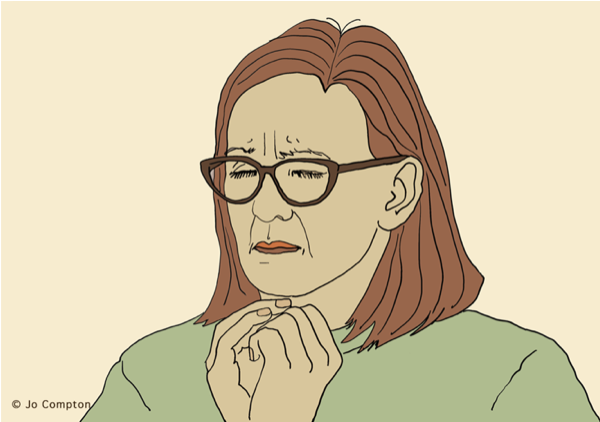
This is an example drawn from the English NHS. It demonstrates several reasons why people may remain silent in a meeting even though they know collaboration and their ideas would help. It deals with some of the causes of silence: deference to seniority, the protection of relationships and a defensiveness born of previous bruising encounters.
The case study also draws attention to ‘noisy silence’ – when excessive talking enables the speaker to silence and avoid discussion of the issues underlying an intractable problem.
I am in this meeting to help facilitate a difficult topic. Twelve people of various professions, including senior managers, have gathered to plan how to support patients who have been moved from the Emergency Department into a ward in the main hospital where the staff have limited experience of their condition but hold an important asset: an empty bed.
It cannot be that they have nothing to contribute. They know this issue inside out. They know, for instance, what it is like to care for a cardiac or cancer patient on an orthopaedic ward. So, their silence is not because they have no knowledge that would be useful.
The senior people are speaking as if they already know what is required to write the strategy. They are making the right noises and dropping in words like ‘safety’ and ‘continuity of care.’ From the moment they walked in, put down their coffees and opened their laptops, they have dominated the space. It’s understandable, as they have responsibility for this high-profile issue.
They seem untroubled by the silence in the room, even though they have told these busy people to be here today. Do they hear the silence as agreement? Perhaps they don’t really need to hear from people. Maybe, procedure requires them to consult but people know that whatever they say, these three can impose their will on the group.
Sometimes senior people enact their dominance through their silence. They know they have no need to speak as the can determine the outcome of the meeting. This power-based silence doesn’t seem to be their strategy today. Maybe these three senior managers do not feel quite so in charge as they appear.
Instead, they are occupying the airtime, so there is limited space for others to talk about their lived experience and knowledge of the issue under discussion. A noisy silence seems to have captured the group.
It’s as if the rest of the participants have been robbed of their agency. We are hard-wired towards obedience and conformity in the face of people we believe to be in charge. We moderate our behaviour and what we say to ‘fit in,’ even if we know this means bad decisions will be made. It’s about avoiding the threat of being evicted for non-compliance, for not being a good team player.[9] This is a silence triggered by a sense that it is just not safe enough, for someone like me, to speak. A defensive silence.
We are also subject to our evolutionary inheritance and what happens day by day. One of the nurse managers had confided that at a previous meeting she had spoken up about a safety issue and been taken aside and told: ‘Your contribution was not helpful.’
The silence of the four ward managers has mixed causes. They, along with everyone else, scanned the room as they sat down, silently working out who was in charge and where their allies might be. These managers rely on each other to make things work; they have each other’s backs. So, they may be quiet today because they do not want to contradict each other in public. They need a united front. It feels like a silence to keep relationships safe, to keep mutual support intact. A pro-social silence. What is lost is their unique perspective on how things work in practice for them, their staff and their patients. Loyalty to colleagues before openness.
I look again around the room and see that the young operations manager is also quiet. He seems tired, blank-faced. He keeps looking down at his laptop, as if he is already preparing for another meeting. But he does raise his head when his boss speaks.
I wonder if he’s silent because he feels there is no point in speaking – no one will be interested in what he knows when they can listen to his boss. He is not invited to speak, as if his task is not to think or share his perspective based on the daily grind, but to do what others in this meeting decide. An acquiescent silence
Naming the silence is more than an interesting exercise. It is a deliberate leadership intervention, a way to hunt down what is missing, what the silence is hiding.
All those attending this meeting had a legitimate vested interest in the outcome. They had come together to manage an intractable problem. Similar behaviours might be observed in any workplace meeting requiring cooperation between different departments to manage unpredictability.
For instance, we can imagine managers in a water company coming together to manage the flow of sewage in the face of an inflexible infrastructure, shareholder expectations and unpredictable weather. We might assume – or hope – that at least a few people around that imaginary table sat silently thinking that pumping shit into our rivers and seas was not the only solution.
Whatever the situation, people enter such meetings with insights, ideas and know-how. These are things they want and feel they have a duty to share if they are to act professionally. Being rendered silent, through self-silencing or being subject to others’ silencing behaviours, means decisions are made on inadequate grounds. Such decisions are likely to reflect the interests of the few, opening a space for harm to those whose concerns have not made it on to the agenda or into the conversation.
Exhaustion

A group of clinicians are talking about how people get silenced in their place of work. Steph, a midwife, who has been quiet for much of the day, offers her experience.
I’m so angry. I’ve just reached the end. I really wanted to keep going but I knew I couldn’t. I was sent to HR and ended up in counselling. I didn’t want to talk about how useless I was feeling, I wanted to get back to work. I love being a midwife, it’s what I do and what I am. But no. I was sidelined and lost the one thing I really value – being a good midwife.
All this played out in front of my team. I couldn’t have felt more useless – I felt as if this was all my fault. There was absolutely no space to talk about the incessant workload, the endless pressure to meet targets for this and that.
To work hard is part of most people’s professional identity. What is called ‘discretionary effort’.[10]
Talking about the negative consequences of too much work is often relegated to the informal spaces of an organisation – to places where it cannot disrupt assumptions about how to organise people, resources or the work itself.
To breach this cultural norm, to express one’s feelings and thoughts formally, is to take the risk of being labelled. To be perceived as lacking willpower, grit and the determination associated with being a ‘good’ professional. If you do breach the norm, then expect to get help – help that can also feel like censure. So, another way to keep people quiet.
Feeling like an imposter: an imaginary conversation
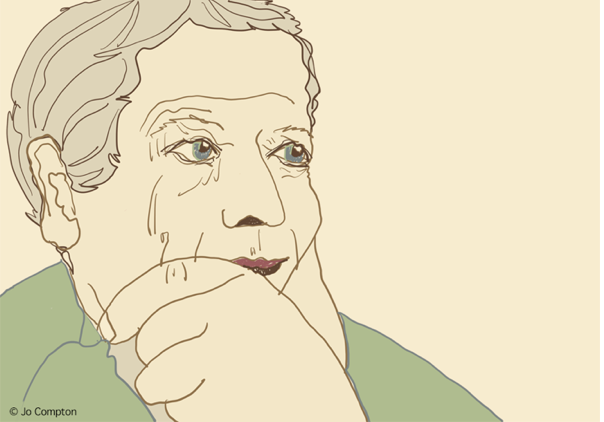
Are you in a place which values overt and loud expressions of confidence? Yes.
Do you think there might be a confusion between confidence and competence around here?
Yes.
Do you think your lack of confidence feels more shameful because you are operating in a work culture where people loudly claim they ‘know’? A place where people are confident in their own abilities; where they overestimate the chances of a successful outcome; where they underestimate what can go wrong; where they disparage and silence the advice and feedback of others? Including yours?
Maybe.
It sounds like you’re in ‘the land of hubris.’[11] What does such a culture do to your voice?
It makes me feel completely useless.
OK. But what do they not get to hear from you as a result, and does it matter? Who or what is at risk of being silenced or ignored because you feel stupid, when clearly you are experienced and well qualified?
Lots.
OK. Then try this…
Consider the possibility that your debilitating feelings of self-blame and doubt may not be all about you.
If the people around you are prone to hubris, then they are probably anxious about their own ignorance, slow to learn and closed to suggestion. People insulate themselves from the real world by criticising in others what they dislike about themselves – doubt, uncertainty, questioning. But doubt, uncertainty and questioning are the basic steps in building new knowledge. They are very important.
So, if you are feeling you are not competent, stop and consider the following. It will help you to distinguish what doubt belongs to you – the feeling of ‘I think I do need to learn how to do this; my doubt is real and helpful in this moment’ – from the doubt that belongs to others. People who only see such dangerous feelings in others, never in themselves, are really stupid people.