Workbook 1
Things to try to help you say something
Here you will find small actions to test and modify in your situation.
When no one wants to listen – keep thinking
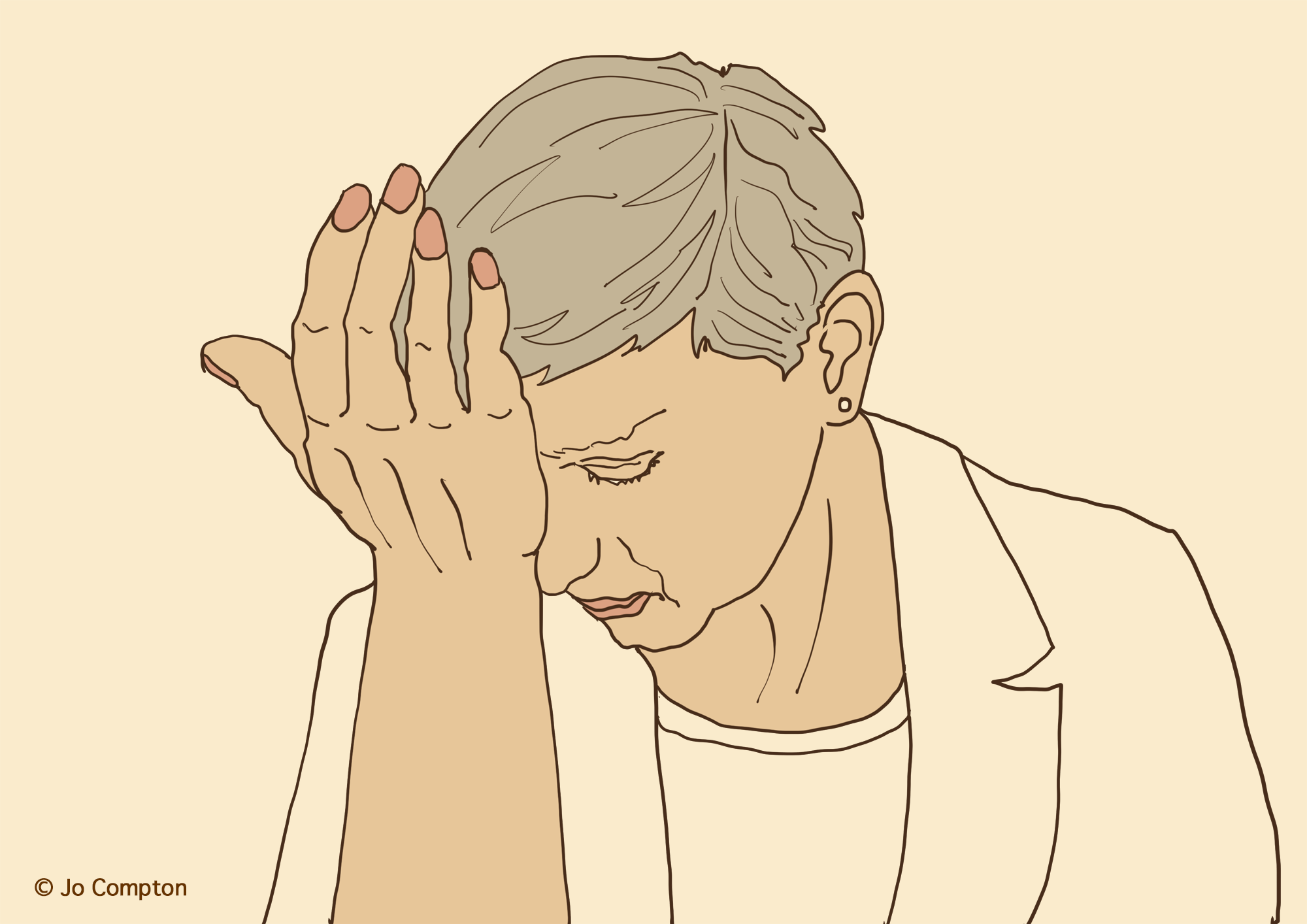
It is a fact. Sometimes the people you are trying to talk to cannot or will not listen. A refusal that has many forms.
‘Just shut up.’
‘Sorry, we don’t have the time.’
‘This is the wrong meeting for that comment.’
‘Don’t you know how busy I am?’
‘We’ve already dealt with that issue.’
‘I want a solution.’
‘You have no idea.’
These statements can feel like an invitation to a fight. A form of bad leadership (LINK). However, we do not have to accept the invitation, particularly if it comes from a senior colleague in an open meeting. The best tactic is to politely refuse and actively wait. Thinking and watchful for any opportunity to talk and be heard. While you wait, be curious about the following:
What is it you know that others may prefer to keep under wraps?
- Why do they want you to be quiet now? What is their anxiety or discomfort?
- Could they hear more if you spoke to them ‘off-line,’ where they may feel safer to talk about what they are really thinking.
- You feel incompetent, useless, stupid, powerless
Consider the possibility that these feelings do not originate in you. That they are an echo of the feelings of your reluctant listener(s), who, because of seniority, profession or self-imposed burden, find it impossible, in this moment, to feel their own uncertainty and ignorance. What they ask of you, without words or thanks, is you hold these troublesome feelings for them, feel them for them, and not complain about their lack of awareness.
A risk is that you come to believe that you are indeed incompetent, and that you act on this belief (LINK Imposter Syndrome). You go quiet, lose confidence, hoping someone who really knows will turn up. You also lose the capacity to be curious. But these feelings of incompetence and ignorance are symptoms of a fact – if we really face this issue, we will all need to go beyond what we know.
Consider taking a step back. Assume you are not as stupid as you feel right now. Remind yourself of your achievements. You could try saying: ‘I may be the only one, but I’m struggling with this issue. Is anybody else feeling like this?’
Keep asking the question – ‘what is being asked of me in this situation, given my values, experience and know-how?’
This question is a counterweight to the anxiety-filled questions we ask ourselves as we anticipate speaking, such as: ‘Will I make sense?’ ‘Will my nerve hold?’ ‘Will I be met with silence?’
Remember, these questions never leave us, however capable we are. But that’s OK, because the task is to balance our natural anxiety with our duty to speak. (After all, we did do the training and take the job!)
- How safe do I feel to speak here?
- What would make it safer to talk today?
- How safe do I feel to express dissent?
- What did I come to say?
- What do others expect of me, given my role and experience?
- What have I noticed that others have not?
- What prevents me/us from bringing this (difficult) issue up?
- Who and what is at risk of being silenced or ignored if I do not speak now – do I care?
- If I sit quietly this time, who benefits and why?
- If I imagine myself speaking, what am I saying?
- What small change can I make to help myself speak?
And, sometimes other people just do not want to hear, are unable to listen. Waiting is ok. You’re still thinking, still in role. You’re quiet, not silenced.
How to speak up and get heard
When you want to speak up it helps to do the groundwork to build your confidence – to know what you think about this issue. Doing this will enable you to become more constructively awkward.
Questions are the preferred tool of the constructively awkward. They use questions to help people slow down, to pause and to think. To punctuate certainty, to sow doubt. To bring back into the conversation the ideas and people who may be absent, silenced. A good question holds a door open. Most people will take up the offer to walk through – to speak, to talk about their thoughts and feelings, to contribute, to get the job done safely and efficiently.
A skill of the constructively awkward practitioner is enabling other people to talk about their thinking and feeling about an issue. They seek to disrupt the flow of a conversation, to create a pause, and time to think about who and what may be at risk of being ignored and silenced as people talk in familiar ways.
Remember, you may have strong views but to simply express them is to invite a fight about who knows what’s best. It is at least as powerful to enable people individually or together, to critically evaluate their own thinking and notice what may have been ignored or missed. And of course you could be wrong in your own certainty.
Use your notebook to remember your favourite open questions. The ones you can use to invite people to say more, to explain themselves. A way of shifting the focus from your thinking to theirs.
Perhaps quietly acknowledge that while there are risks, there is pleasure to be found in putting people right, speaking up for others, doing the right thing by your own values, insisting on justice.
- Allow the question ‘what is being asked of me’ to surface and, in your head, answer it.
- Add to the mix your response to the question - who or what will be ignored and silenced if I do not find my voice today?
- Be well prepared. Read any relevant documents. Know the data. Map the arguments for alternative readings of the data. Consider who is in the room and how they may react to being questioned. Think about how others might react. This is the groundwork you can do to build confidence – what you think about this issue.
- Rehearse what you want to say. Focus on your opening comments and write down in a notebook. Prompts to manage the risk of a ‘dry’ as you metaphorically walk on stage.
- Evaluate how safe you feel. Consider the following: How safe do I feel to express what may sound like dissent? What would make it safer for me to talk today? What prevents me and others from bringing this (difficult) issue up right now? If I felt psychologically safer, what would I say?
- Use your notebook to remember your favourite open questions. The ones you can use to invite people to say more, to explain themselves. A way of shifting the focus from your thinking to theirs (LINK).
- Perhaps quietly acknowledge that while there are risks, there is pleasure to be found in putting people right, speaking up for others, doing the right thing by your own values, insisting on justice.
- Say something about your thinking?
- What led you to this approach / idea / assumption?
- What makes you / us so sure that our approach will work as planned?
- Based on your expertise, what do you think is less certain?
- In your opinion, what could we be missing of avoiding?
- What do we need to look out for, to be worried about?
- What does the evidence suggest is a way forward?
Try these open questions to invite people to speak, dig deeper.
- Who and what are we busily ignoring?
- How do we help each other to speak?
- How do we give permission to speak?
- How do we silence each other?
- How do we remind people of their place, status and right to speak?
- How do we manage conflict?
- How do we enable the scope of our talk to expand?
- How we do we limit its scope?
- What choices do we offer about this issue? Just to agree? To have dissenting voices?
- Why are these the available choices – and who benefits?
- What rituals shape our meetings and our conversations?
- How do we simplify complexity?
- What questions are we failing to ask?
Next time, when the usual people are talking and you are feeling bored and having to fight hard not to look at your messages, try the following – in your head or out loud.
Be ready to repair relationships

I live in a place where the lanes are badly potholed. They will not be resurfaced; the council have no money. Every so often, though, someone comes along to fill in the deepest holes. Now, cautious drivers can use the lane without damage to their vehicles.
It’s not a perfect lane, but its qualities as a lane have been restored. And repairing a conversation is a bit like this. The repairs can be imperfect, leaving the way a little bumpy, but they do not have to be perfect to work. All we need is the feeling that it is safe enough for talking and thinking together to continue.
There are two opportunities to repair things: in action or mid-conversation, and post action after the conversation has ended. Here are some ideas to help you do both – and to encourage you to analyse what went wrong and react more constructively (if not less awkwardly) next time.
- Is my voice too loud – do I sound cross?
- Is my voice too soft – do I sound timid and unsure?
- Are the words I’m using likely to offend?
- Do I need to slow down and take a breath?
- Are people looking anxious and uncomfortable?
- Are people pushing back?
- Have I acknowledged the good work people have done?
Try to maintain an overview as you speak. The following questions can help you to adjust your tone and volume, as well as the content, mid-conversation.
- Acknowledge that it didn’t go to as you intended but that your intention was honourable. You were trying to draw attention to who and what was at risk of being silenced or ignored.
- Forgive yourself. How you make sense of what’s going on and what needs attention will never be perfectly aligned to how others think and make sense of what’s going on. Communication is often imperfect but rarely impossible.
- Remember, while your words may have landed awkwardly, your willingness to speak up may encourage others to do the same. People value those who take the risk to speak.
- Consider the idea that we are never entirely in charge of how we behave. Work can remind us of people and events from our past and we can find ourselves responding as if still in the past.
The following can help you de-brief if you conclude ‘that could have gone better’ when lying awake at 2am.
- Did you lack preparation?
- Were you provoked?
- Were you hungry or already stressed?
- Is this issue so far out of bounds that you need another approach?
- Was it to do with the environment – room layout, too many people, wrong meeting, interruptions, not enough time, political pressures intruding into the room, etc.?
- Sometimes, the simple statement ‘I got that wrong’ is required. Acknowledging that one could have done things differently, used different words, been clearer. Two things to remember: an apology should not be taken by you or others as weakness or as an indication that the underlying issue has gone away.
- If you must go again, consider talking it through with a trusted person. Rehearsal can help to get the words organised and boil off some of the emotion without blunting the passion required to disrupt and say difficult things.
Then think about – what it was about this context, this issue, that flipped ‘constructive’ into ‘awkward.’ Useful knowledge for next time.
- I need help. What am I not understanding about this situation and about your thinking and approach?
- Help me to understand your thinking – you know it best.
These questions and strategies can help slow things down, to enable you to backtrack with humility.